Doge Alvise Mocenigo and Family Before the Madonna and Child
Alvise I di Tommaso Mocenigo (1507–1577) was the fourth member of the Mocenigo family to become doge of Venice. His tenure in office (1570–1577) was notable for a number of historic events: the victory of the Holy League (Venice, Espana, and the Papacy) over the Turks in the sea boxing of Lepanto in 1571; Venice's controversial conclusion of a separate peace with the Turks in 1573; the visit of Henry III of France to Venice in 1574; a disastrous fire in the Palazzo Ducale in 1574; and the devastating plague of 1575–1577, which prompted the doge to take a vow to build the votive church building that became Santa Maria della Salute. His ducal iconography includes his official portrait past 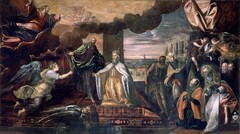 [fig. ane] Jacopo Tintoretto and Workshop, Doge Alvise Mocenigo Attended by Saint Marker and Other Saints before the Redeemer, c. 1582, oil on canvas, Palazzo Ducale, Venice. Cameraphoto © Photo Archive - Fondazione Musei Civici di Venezia
Tracy E. Cooper, "The Trials of David: Triumph and Crisis in the Imagery of Doge Alvise I Mocenigo (1570–1577)," Centre / National Gallery of Art, Center for Advanced Report in the Visual Arts xviii (1998): 64–68; Tracy E. Cooper, Palladio's Venice: Architecture and Society in a Renaissance Republic (New Haven, 2005), 189–195; Miguel Falomir, in Tintoretto, ed. Miguel Falomir (Madrid, 2007), 329; Benjamin Paul, "Les tombeaux des doges vénitiens: De fifty'autocélébration dans une République," in Les Funérailles princières en Europe, Sixteene–Xviiie: two. Apothéoses monumentales, ed. Juliusz A. Chrościcki, Mark Hengerer, and Gérard Sabatier (Rennes, 2013), 167–168; Benjamin Paul, "Convertire in se medesimo questo flagello: Autocritica del Doge Alvise Mocenigo nel bozzetto di Tintoretto per il dipinto votivo a Palazzo Ducale," in Celebrazione e autocritica: La Serenissima e la ricerca dell'identità veneziana nel tardo Cinquecento, ed. Benjamin Paul (Rome, 2014), 131–134.
Co-ordinate to Tintoretto's 17th-century biographer Carlo Ridolfi, "in the business firm of Signor Toma Mocenigo . . . in a long canvas is the aforementioned [Doge Alvise Mocenigo] with his wife adoring the Queen of Heaven, with other portraits of senators and children of the same family, shown equally angels at the anxiety of Our Lady, who play on instruments."
Carlo Ridolfi, Le maraviglie dell'arte, overo Le vite de gl'illustri pittori veneti, e dello stato (Venice, 1648), 2:44; Carlo Ridolfi, Le maraviglie dell'arte, overo Le vite de gl'illustri pittori veneti, e dello stato, ed. Detlev von Hadeln (Berlin, 1924), 2:53.
Cecilia Gibellini, L'immagine di Lepanto: La celebrazione della vittoria nella letteratura east nell'arte veneziana (Venice, 2008), 52–53, argued convincingly that the dogaressa is as well pictured in the painting past Jacopo Palma il Giovane of the Doge Alvise Mocenigo Thanking the Virgin for the Victory at Lepanto in the church of San Fantin, Venice. 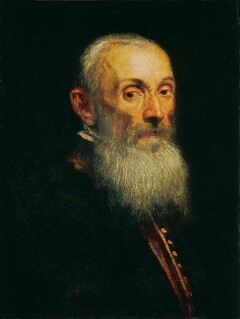 [fig. 2] Jacopo Tintoretto, Giovanni Mocenigo, belatedly 1570s, oil on canvas, Staatliche Museen, Berlin. bpk Bildagentur / Staatliche Museen, Berlin / Joerg P. Anders / Art Resource, NY
Paola Rossi, Jacopo Tintoretto: I ritratti (Venice, 1974), cat. no 15; Paola Rossi, ed., Jacopo Tintoretto: Ritratti (Milan, 1994), 160, cat. no. 39. There he looks significantly older than in the Washington painting. The more than youthful and idealized representation in the Washington painting is probably intended to convey a sense of timelessness consistent with its dynastic function.
Rodolfo Pallucchini, "Un capolavoro del Tintoretto: La Madonna del Doge Alvise Mocenigo," Arte Veneta eight (1954): 222–224; Tracy E. Cooper, "The Trials of David: Triumph and Crisis in the Imagery of Doge Alvise I Mocenigo (1570–1577)," Center / National Gallery of Art, Middle for Advanced Study in the Visual Arts 18 (1998): 64–68; Tracy E. Cooper, Palladio'south Venice: Architecture and Social club in a Renaissance Republic (New Haven, 2005), 189–195. Nicolò is pictured along with Giovanni in the votive painting in the Palazzo Ducale; run across Cooper, Palladio'southward Venice, 195; and Benjamin Paul, "Convertire in se medesimo questo flagello: Autocritica del Doge Alvise Mocenigo nel bozzetto di Tintoretto per il dipinto votivo a Palazzo Ducale," in Celebrazione eastward autocritica: La Serenissima e la ricerca dell'identità veneziana nel tardo Cinquecento, ed. Benjamin Paul (Rome, 2014), 134. The date of Nicolò's death was provided by Tracy E. Cooper.
Ridolfi'southward statement that the angel musicians correspond children of the Mocenigo family unit was presumably based on family tradition. The youth at the correct appears in a separate portrait by Tintoretto or an associate (private collection) 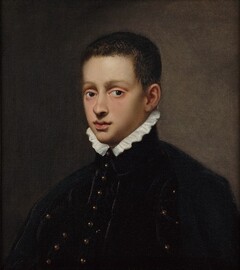 [fig. 3] Jacopo Tintoretto, Portrait of a Boy, c. 1575, oil on canvas, Individual Drove. Photograph © Christie'due south Images / Bridgeman Images
Portrait of a Male child; Paola Rossi, Jacopo Tintoretto: I ritratti (Venice, 1974), true cat. 102, fig. 175; sold Christie'due south, London, July vi, 2007, lot 222, sale 7414. The early on provenance of this picture is unknown.
By 1580, when Giovanni died, he had two young grandsons living at San Samuele: Tommaso's son Giovanni, born in 1578, and Alvise's son Alvise I, built-in in 1580, a few months before his grandfather's death that aforementioned year. This information was provided past Tracy Due east. Cooper.
The Gallery's painting must take been executed after Leonardo's death in 1572. (Otherwise, he would certainly have appeared in it.) Pallucchini and others, bold that the portrait of Loredana was taken from life, have seen her death in December 1572 as a terminus dues quem, and thus dated the painting precisely to that year, during the short period between the death of Leonardo and that of the dogaressa.
Meet Paola Rossi, in Jacopo Tintoretto: Ritratti, ed. Paola Rossi (Milan, 1994), 152; Miguel Falomir, in Tintoretto, ed. Miguel Falomir (Madrid, 2007), 329; Tracy E. Cooper, "Patricians and Citizens," in Venice and the Veneto, ed. Peter Humfrey (New York, 2007), 155; Robert Echols and Frederick Ilchman, "Toward a New Tintoretto Catalogue, with a Checklist of Revised Attributions and a New Chronology," in Jacopo Tintoretto: Actas del congreso internacional/Proceedings of the International Symposium, Museo Nacional del Prado, Madrid, February 26–27, 2007 (Madrid, 2009), 126, no. 158.
Technical evidence cannot explicate the reason that the four portraits were added to the painting. However, it is consistent with the hypothesis that the portraits came from a damaged preexisting painting and were reused in the electric current painting. The earlier version might well have included Leonardo, but if the family had simply wanted a new flick without him, it seems more likely that changes would have been made on the original sheet rather than dismembering information technology. For some other example of a Tintoretto work in which a preexisting, apparently damaged painting was reused, see the Nativity (Museum of Fine Arts, Boston) in Frederick Ilchman et al., Titian, Tintoretto, Veronese: Rivals in Renaissance Venice (Boston, 2009), 164–172, cat. no. 26. For examples of other paintings from the Tintoretto studio in which portraits were inserted into larger canvases, see Miguel Falomir, in Tintoretto, ed. Miguel Falomir (Madrid, 2007), 110, suggesting that the purpose of the practice was primarily for efficiency. See also Fern Rusk Shapley, Catalogue of the Italian Paintings (Washington, DC, 1979), one:474 north. 7.
See Miguel Falomir, in Tintoretto, ed. Miguel Falomir (Madrid, 2007), 105.
The current painting may thus take been executed after Loredana'due south death. A plausible date would be circa 1575, based on the likelihood that information technology was commissioned in 1574, at the time Alvise made the codicil to his will, when dynastic concerns were clearly on the minds of the two brothers. Indeed, Giovanni may have been a joint or even the sole patron. The painting was undoubtedly intended to hang in the thou key hall (portego or sala) of the palace at San Samuele, where Giovanni and his sons lived and where Ridolfi saw it some seven decades later.
Tracy Eastward. Cooper, "The Trials of David: Triumph and Crisis in the Imagery of Doge Alvise I Mocenigo (1570–1577)," Center / National Gallery of Fine art, Center for Avant-garde Study in the Visual Arts xviii (1998): 67–68, has identified the Toma Mocenigo named by Ridolfi as the owner of the onetime Mocenigo palace at San Samuele and a groovy-grandson of Giovanni Mocenigo (b. 1608). Simona Savini Branca, Il collezionismo veneziano del Seicento (Padua, 1965), 243, mistakenly sought to place him as a member of the San Stae branch of the family unit. On portego paintings, see Monika Schmitter, "The Quadro da Portego in Sixteenth-Century Venetian Art," Renaissance Quarterly 64, no. 3 (2011): 693–751.
The mural background may be intended to correspond the Mocenigo family unit's holdings at Villabona on the Venetian terraferma.
Tracy Eastward. Cooper, "The Trials of David: Triumph and Crisis in the Imagery of Doge Alvise I Mocenigo (1570–1577)," Center / National Gallery of Art, Eye for Advanced Study in the Visual Arts eighteen (1998): 67, suggests that the landscape has a moralizing graphic symbol, the classicizing temple and peasant hut representing an exhortation to virtue.
See Tracy E. Cooper, "Patricians and Citizens," in Venice and the Veneto, ed. Peter Humfrey (New York, 2007), 155. Cecilia Gibellini, L'immagine di Lepanto: La celebrazione della vittoria nella letteratura due east nell'arte veneziana (Venice, 2008), 168–169, argued that an explicit reference to the rosary would exist unlikely considering the rosary was no longer celebrated in Venice later on the plummet of the Holy League in 1573, due to its associations with Rome.
The picture is a variant of the official votive paintings that decorated the Palazzo Ducale and other regime buildings in Venice. These are part of a long tradition of Venetian paintings that bear witness the patrons venerating or being presented to the Virgin and Kid past their patron saints. Tintoretto's finest votive painting is the Madonna of the Treasurers of circa 1567 (originally in the Palazzo dei Camerlenghi; now Gallerie dell'Accademia, Venice); he and his studio assistants were likewise responsible for many of the doges' votive paintings executed for the Palazzo Ducale in the early 1580s to supercede those lost in the fires of 1574 and 1577. Although less common than official votive paintings, other examples of domestic family votive paintings exist, including
On the Cuccina pictures, run across Blake de Maria, Condign Venetian: Immigrants and the Arts in Early Modern Venice (New Haven and London, 2010), 143–159.
Meet Robert Echols, "Tintoretto the Painter," in Tintoretto, ed. Miguel Falomir (Madrid, 2007), 28; Robert Echols and Frederick Ilchman, "Toward a New Tintoretto Catalogue, with a Checklist of Revised Attributions and a New Chronology," in Jacopo Tintoretto: Actas del congreso internacional/Proceedings of the International Symposium, Museo Nacional del Prado, Madrid, February 26–27, 2007 (Madrid, 2009), 99.
Wolfgang Wolters, Der Bilderschmuck des Dogenpalastes: Untersuchungen zur Selbstdarstellung der Republik Venedig im 16. Jahrhundert (Wiesbaden, 1983), 124; Italian ed., Wolfgang Wolters, Storia e politica nei dipinti di Palazzo Ducale: Aspetti dell'autocelebrazione della Repubblica di Venezia nel Cinquecento, trans. Benedetta Heinemann Campana (Venice, 1987), 123.
While there is no question of the attribution to Tintoretto, scholars have disagreed as to the level of studio intervention in the picture. Pallucchini and Paola Rossi affirmed information technology every bit autograph, equally a number of other writers seemed to presume; in contrast, Bernard Berenson called it "studio piece of work"; Fern Rusk Shapley noted that some areas, including the Virgin and Child, are less inspired and well modeled than other parts of the picture, and suggested that they reveal studio participation; West. R. Rearick saw the entire picture as a "workshop assemblage" with a few portraits by Jacopo himself; Robert Echols and Frederick Ilchman assigned it to "Jacopo and studio."
Rodolfo Pallucchini and Paola Rossi, Tintoretto: Le opere sacre eastward profane (Venice, 1982), 1: true cat. no. 324; Bernard Berenson, Italian Pictures of the Renaissance: Venetian School (London, 1957), 2:157; Fern Rusk Shapley, Catalogue of the Italian Paintings (Washington, DC, 1979), 1:474; West. R. Rearick, "Reflections on Tintoretto as a Portraitist," Artibus et Historiae xvi, no. 31 (1995): 62; Robert Echols and Frederick Ilchman, "Toward a New Tintoretto Catalogue, with a Checklist of Revised Attributions and a New Chronology," in Jacopo Tintoretto: Actas del congreso internacional/Proceedings of the International Symposium, Museo Nacional del Prado, Madrid, February 26–27, 2007 (Madrid, 2009), 126, no. 158.
On Tintoretto's studio, meet Rodolfo Pallucchini and Paola Rossi, Tintoretto: Le opere sacre e profane (Venice, 1982), one:81–82; Robert Echols, "Tintoretto the Painter," in Tintoretto, ed. Miguel Falomir (Madrid, 2007), 55–62; Robert Echols and Frederick Ilchman, "Toward a New Tintoretto Catalogue, with a Checklist of Revised Attributions and a New Chronology," in Jacopo Tintoretto: Actas del congreso internacional/Proceedings of the International Symposium, Museo Nacional del Prado, Madrid, February 26–27, 2007 (Madrid, 2009), 99–102. On the likely presence there of portrait specialists, see Miguel Falomir, in Tintoretto, ed. Miguel Falomir (Madrid, 2007), 110.
Robert Echols
March 21, 2019
Source: https://www.nga.gov/collection/art-object-page.46143.html
0 Response to "Doge Alvise Mocenigo and Family Before the Madonna and Child"
Post a Comment