How Is Cleo 5 to 7 an Art Film
After the recent passing of "the grandmother of the Nouvelle Vague," newspaper articles reflected back on the work of filmmaker Agnes Varda. Her debut flick, Cleo from 5 to 7 continues to fascinates. Equally we spotter a young woman struggling with her demons, set against a cute backdrop of 1960s Paris, Varda's masterpiece ticks all the boxes of the Nouvelle Vague artful. The flick cleverly fuses mysticism, everyday life and tragedy without losing its lighthearted French flair. The film is likewise deeply personal, empathetic and (cocky-) reflexive.
Cleo from v to 7 tells the story of a immature female person singer who changes her self-perception in the course of a fateful afternoon. Every bit Cleo fearfully awaits the results of a biopsy, she embarks on a journeying of self-discovery. Tired of beingness reduced to her charm and beauty, Cleo makes a meaning transition. The film is full of mirrors, figuratively and symbolically; it revolves around Cleo's reflection, how others perceive her, and images of fate which swirl around her.
The film's mirror motif can exist divided into three belittling parts. In his famous psychoanalytic formulation, "the mirror phase," Jacques Lacan states that what nosotros remember of our own identity is actually pure Imaginary, a construct behind which the real subject resides.[i] Cleo from 5 to seven starts with a tarot card reading which predicts death. Cleo immediately tries to reassure herself by looking into a mirror.
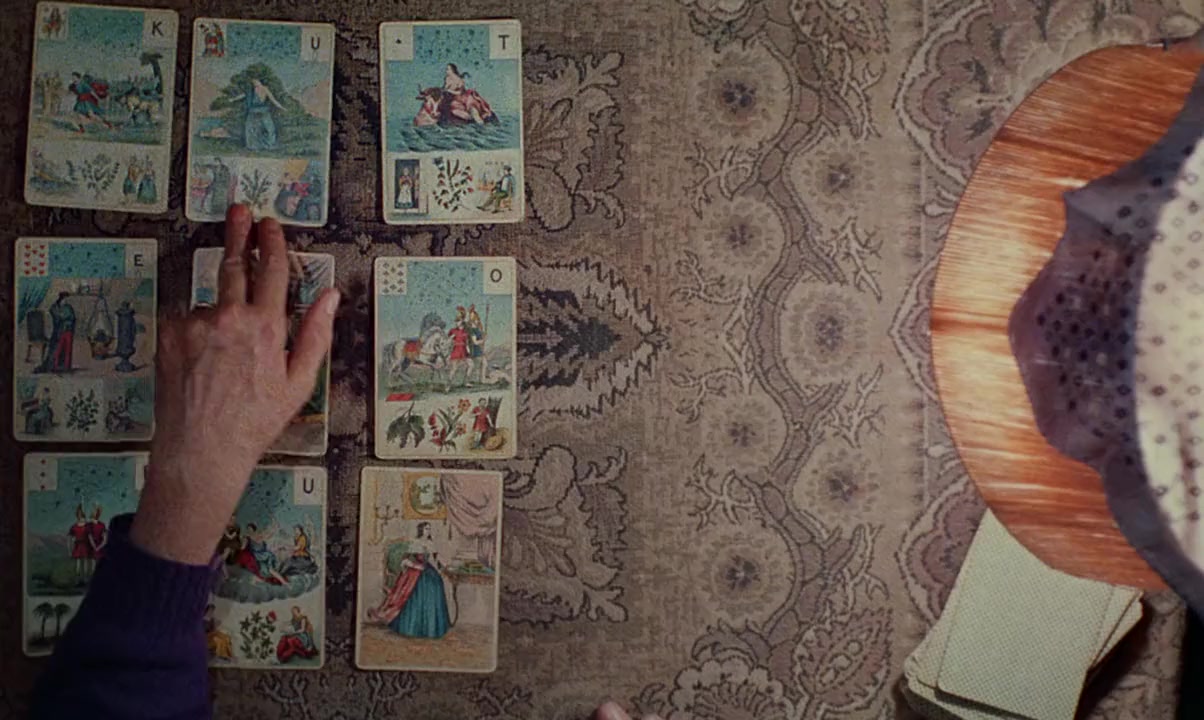
Effigy i: Cleo from 5 to seven begins in color with tarot cards laying out a doomed life. The entire storyline of the blackness-and-white film is foretold.
Cleo has a constructed epitome of herself, and easily finds comfort in it. Her dazzler is her proof that she is more than alive than the others around her. The mirror'southward reflection validates her existence. Walking downwards the streets of Paris, Cleo is objectified by both men and women. At dwelling, she finds herself surrounded by her maid and friends, who produce her music. All the same, she is not able to write whatsoever songs on her own.
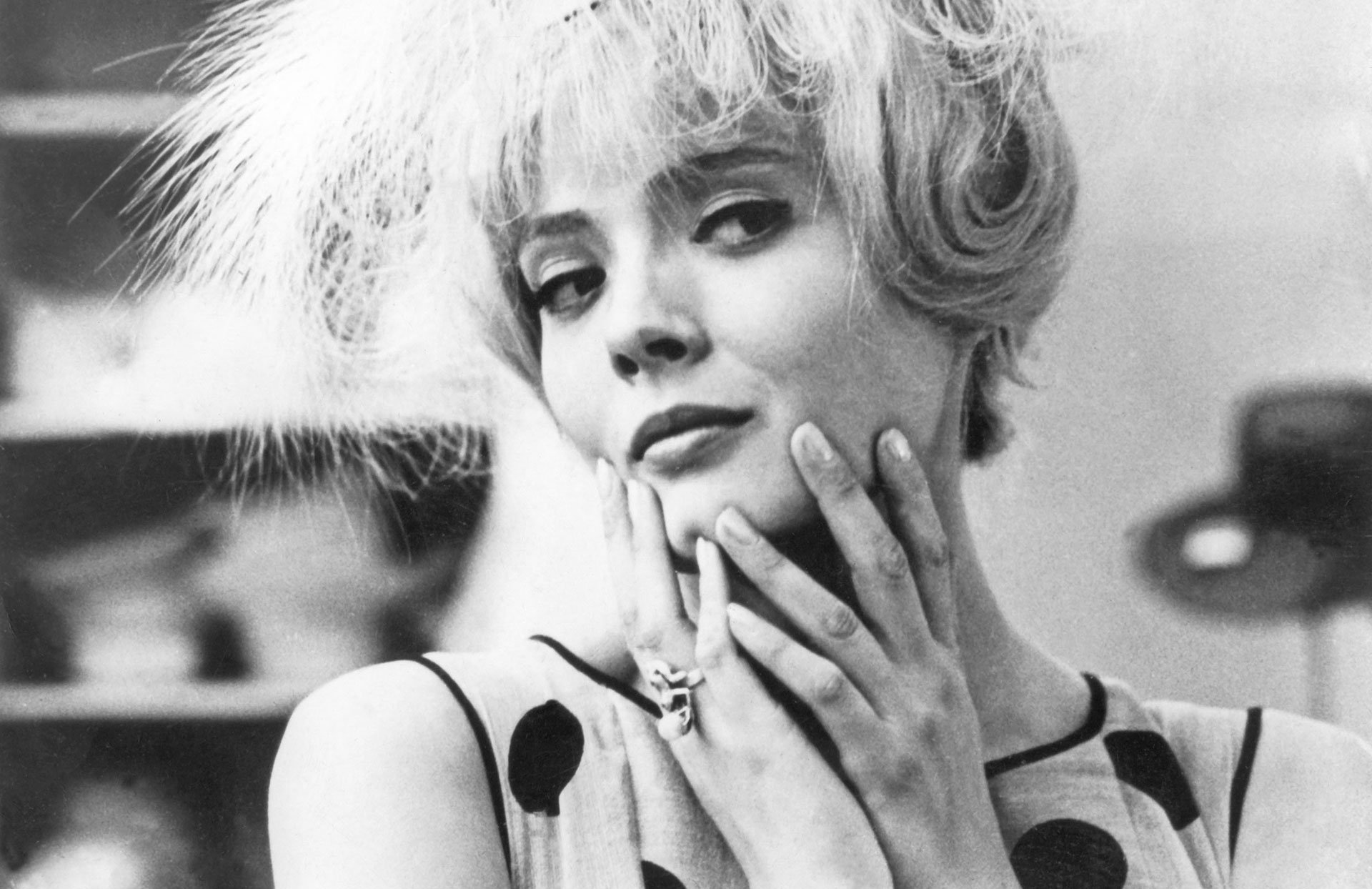
Figure 2: Cleo tries to reassure herself by focusing on her beauty, a fiction that she is more than alive than others.
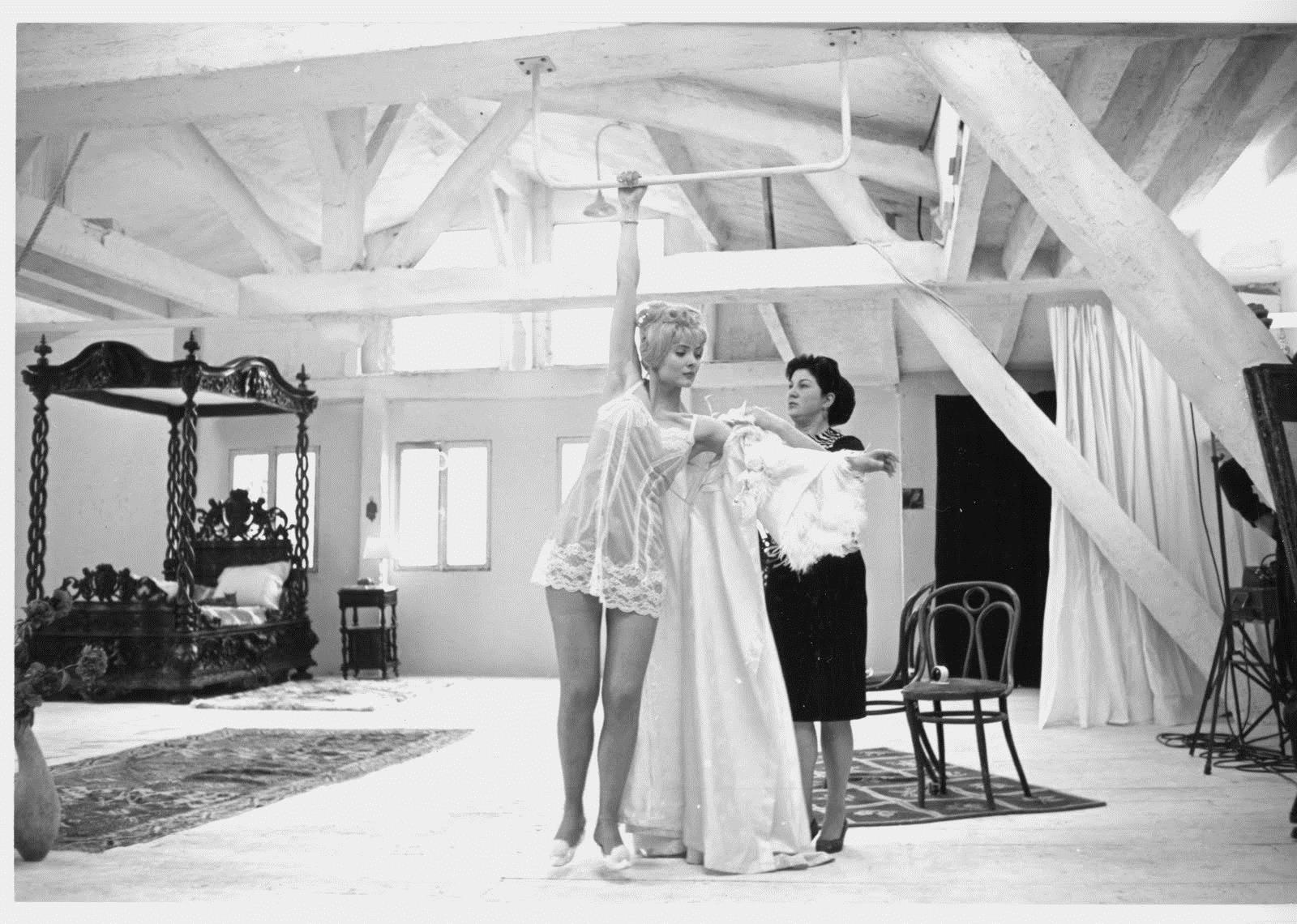
Figure 3: At home, Cleo is a little child, spoiled by her maid.
A vocal that sounds like an eulogy to herself triggers an emotional reaction. A different consciousness all of a sudden evolves. She leaves her domicile and enters a second stage of mirroring. Standing her journey in the streets, she now blends with the crowd, no longer the one being looked at. No 1 pays attention to her; she is anonymous behind her glasses.
This new role culminates when Cleo meets a friend, a nude model for sculptors. She gazes in amazement at her friend's skilful poses. Cleo'due south new function every bit viewer has reached its pinnacle. In this section, Cleo'southward epitome is only reflected back at herself through broken glass. When Cleo looks in a mirror in a cafe, it reveals a fragmented, distorted perception of herself.
In Lacanian terms, Cleo does not perceive herself equally a whole anymore; she becomes detached from her previous life. For Lacan, the moment in which the infant looks at his reflection in the mirror is when the child develops a sense of self. Before this, the kid doesn't think of himself equally an private at all, but simply exists equally a unified subject area, as one with his environment. Therefore, the development of a sense of identity leads to a distorted image of one'due south true cocky. Lacan insists that we are detached, oblivious to our real selves. This new human relationship the child develops between the subject and object expresses the tension between the Imaginary and the Real. Cleo is now faced with a crisis. She recognizes baloney, becoming an adult with nix to lose. Her real self can now emerge.
The 3rd and terminal stage of Cleo's journey comes via her come across with the soldier, Antoine. His gaze at her is unspoiled, marked past innocence and kindness. He sees her as a whole being. For the first time, we run into that Cleo is not just a spoilt child, just a woman knowledgeable about the arts. Suddenly, she is a confident, intelligent woman. One sincere look at her has accomplished the transformation.
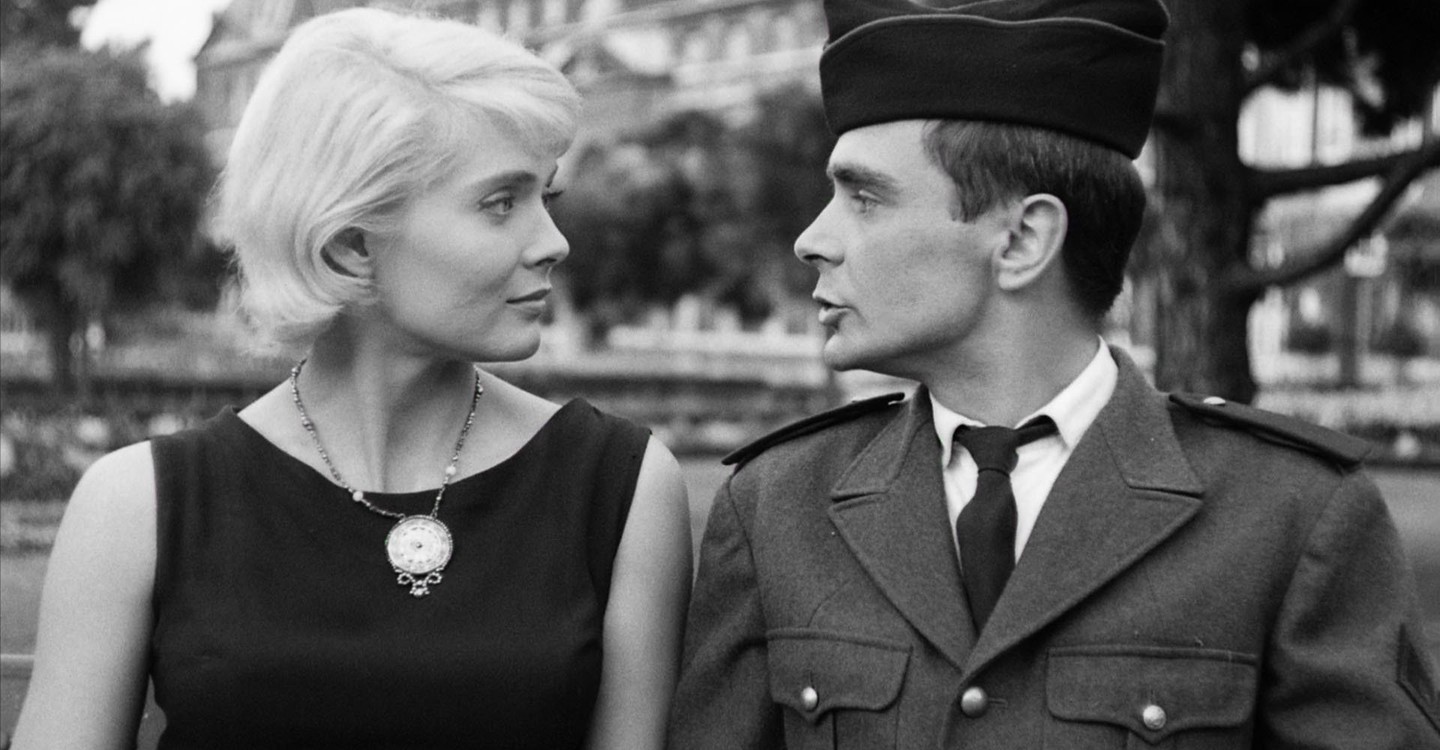
Effigy 4: Antoine sees Cleo every bit Florence, a cocky she has kept private. He looks at her with genuine curiosity. The framing suggests equality between both parties.
In that location are no mirrors or reflections of any kind during the encounter with Antoine. When Cleo sings and dances in the park, she does information technology for herself; at that place are no viewers. Antoine calls her by her real proper name, Florence. In response, Cleo displays the demeanor of someone who is truly at peace with herself. The framing and camera angles suggest equality between the 2 man beings. Cleo is finally accustomed for being her truthful self. Cleo completes the journey from fragmented ego images constructed by reflections to a whole being, one who tin can exist without mirrors.
Varda'due south masterpiece takes us on a complex journey of possession, loss, and the finding of stable identity. Released in 1962, the film was part of a general move toward female person empowerment that spanned across Europe and Hollywood. Still, the film is more than just a celebration of a immature contained woman. Varda not but shows united states where belittlement and oppression come from, she as well presents a defence force against them. She fights female objectification and loss of cocky with the mise-en-scene device of the mirror.
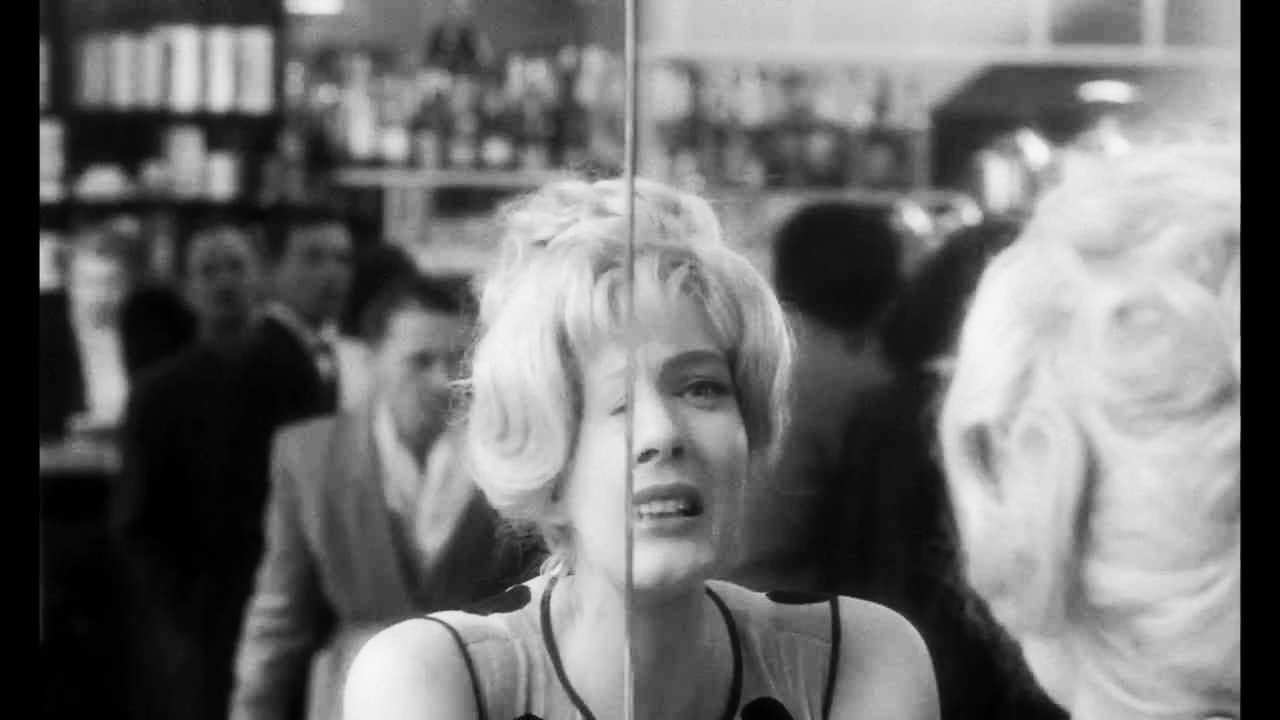
Effigy 5: Cleo sees her distorted self in the mirror, now alienated from her surroundings and her previous self.
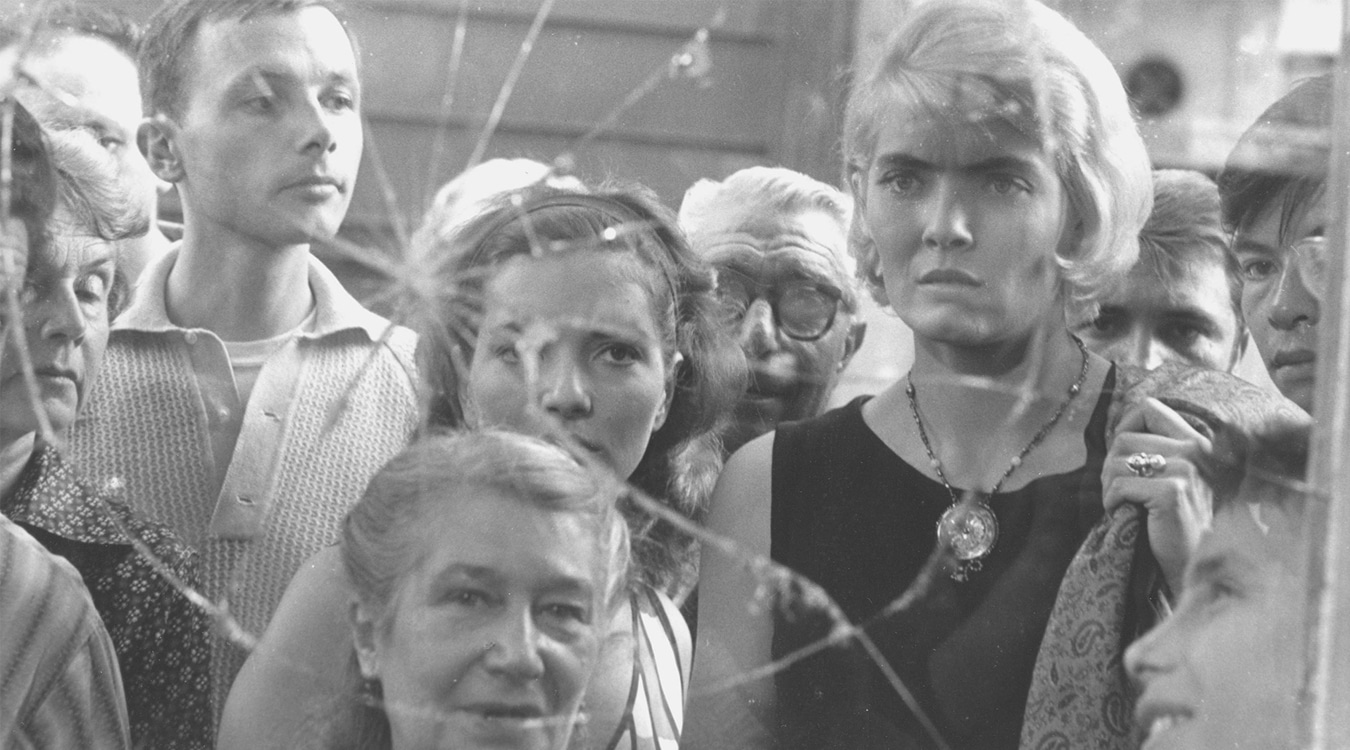
Figure 6: Shattered, Cleo begins discovering her new cocky. The erstwhile Cleo's fancy dress and wig is now a mere memory image.
In an paradigm-based society where one's identity has come to exist dominated past selfies, and defined by what other people encounter on social media, we are subject to identity fragmentation. The identity of the cocky has become marketable in a world where an "influencer" is a chore and not only a rhetorical role. To add insult to injury, success in such a world is ironically attributed to "authenticity." Needless to say that Cleo's journey is just as relevant today as it was in the 1960s.
Author Biography
Arijana Zeric earned a university degree in Pic History and Aesthetics in Paris, focusing on the office of women in the films of Rainer Werner Fassbinder. Specializing in French, Italian and German movie house, she currently lives and works in London.
Notes
-
Lacan, Jacques. "The Mirror Stage." Social Theory: The Multicultural Readings. Ed. Charles Lemert. Philadelphia: Westview P, 2010. 343-344. Reprinted from Ecrits: A Selection. New York: Taylor and Francis. 1977. 172-175.

Source: https://quod.lib.umich.edu/f/fc/13761232.0043.309/--return-to-the-self-agnes-vardas-cleo-from-5-to-7?rgn=main;view=fulltext
0 Response to "How Is Cleo 5 to 7 an Art Film"
Post a Comment